Healthcare Innovation
Thailand Performs First Domestic Robotic Telesurgery
Thailand has completed its first domestic robotic telesurgery, connecting surgeons in Bangkok with a prostate cancer patient more than 250 km away.
Written by
Siam Medica
Thailand Completes First Domestic Robotic Telesurgery
Thailand reaches a new milestone in robotic surgery
Thailand has taken another step in the development of advanced medical technology with the country’s first domestic robotic telesurgery.
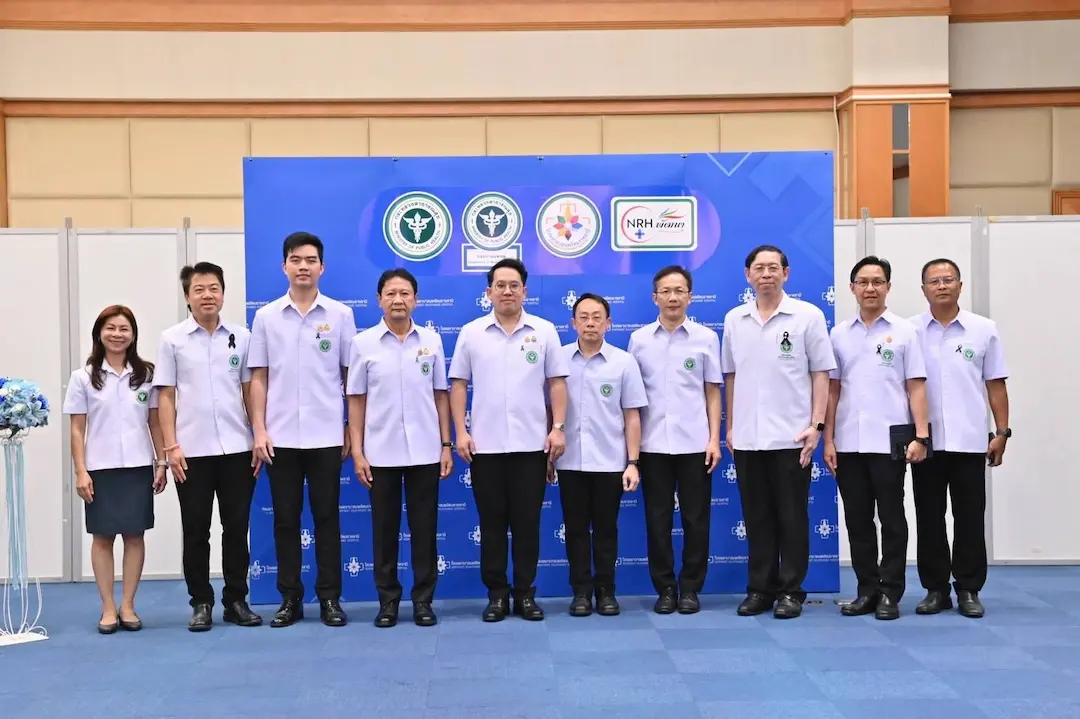
On 24 August 2026, a surgeon at Nopparat Rajathanee Hospital in Bangkok remotely controlled a robotic surgical system used to operate on a prostate cancer patient at Maharat Nakhon Ratchasima Hospital, more than 250 kilometres away.
Medical teams were present at both hospitals. The lead surgeon operated the robotic system remotely from Bangkok, while specialists in Nakhon Ratchasima remained with the patient in the operating theatre.
The procedure represents an important milestone in Thailand’s adoption of robotic and remote surgical technology, demonstrating how specialist expertise can potentially be delivered across considerable distances without requiring the lead surgeon to be physically present at the same hospital as the patient.
What is robotic telesurgery?
Robotic telesurgery allows a surgeon to control a surgical robotic system from a different location.
Rather than standing directly beside the patient, the surgeon operates from a specialised console. The surgeon’s movements are transmitted to robotic instruments in the operating theatre, while high-resolution imaging allows the medical team to monitor the procedure in real time.
For this type of surgery to work effectively, the connection between the two locations must be extremely fast and stable.
During the Thailand procedure, the hospitals were connected through a high-speed network with reported latency of approximately 22 milliseconds, allowing the robotic system to respond to the surgeon’s movements with very little delay.
Connecting Bangkok with regional medical centres
The significance of the procedure extends beyond the technology itself.
One of the potential applications of telesurgery is to make highly specialised surgical expertise more accessible to hospitals outside major medical centres.
Thailand has a large concentration of specialist expertise in Bangkok, while advanced medical capabilities are also expanding across regional hospitals. Remote robotic systems could eventually allow specialist surgeons to work alongside regional medical teams without either the patient or the lead surgeon having to travel long distances.
Thailand plans to expand robotic surgical capabilities through regional hospital networks, with the August procedure providing an early model for how that technology could be used within the national healthcare system.
Part of a broader development in robotic medicine
The August procedure was not Thailand’s first experience with remote robotic surgery.
Earlier in 2026, medical teams in Thailand and China completed cross-border robotic procedures over distances of more than 2,000 kilometres, including gallbladder surgery in April and a prostate cancer procedure later in the year. Those projects helped demonstrate the ability of robotic surgical systems to operate across international distances.
Thailand’s experience with robotic surgery was also growing before the August milestone. Nopparat Rajathanee Hospital introduced robot-assisted surgery in late 2025 and has since used the technology across specialties including urology, general surgery and gynaecology.
By August 2026, the hospital had completed 52 robot-assisted procedures, creating an existing base of surgical experience before moving into domestic telesurgery.
Why this matters for Thailand’s healthcare sector
Making telesurgery work across two hospitals depends on a combination of surgical expertise, reliable communications and well-equipped medical teams at both locations.
The achievement reflects a wider trend within Thailand’s healthcare sector, with continued investment in advanced medical technology and specialist capabilities.
Alongside developments in genomics, precision medicine, artificial intelligence and advanced cancer care, robotic surgery is another example of Thailand moving beyond its traditional reputation as a destination primarily associated with affordable healthcare.
The country is increasingly developing the infrastructure and expertise associated with highly specialised and technology-intensive medicine.
Sources
Thailand Government Public Relations Department
Thailand Conducts First Domestic Robotic Telesurgery
The Nation Thailand
Thai surgeon performs Thailand’s first interprovincial telesurgery on prostate cancer patient
Hfocus
Thailand’s first robotic telesurgery for prostate cancer
Considering treatment in Thailand?
Tell us what care you’re looking for. We’ll help you understand your options in Thailand and guide you through the next steps. Our support is free for patients.
